
A first vocabulary
Studying at ECHO Asia introduced permaculture and agroecology as ways to read and design whole systems.
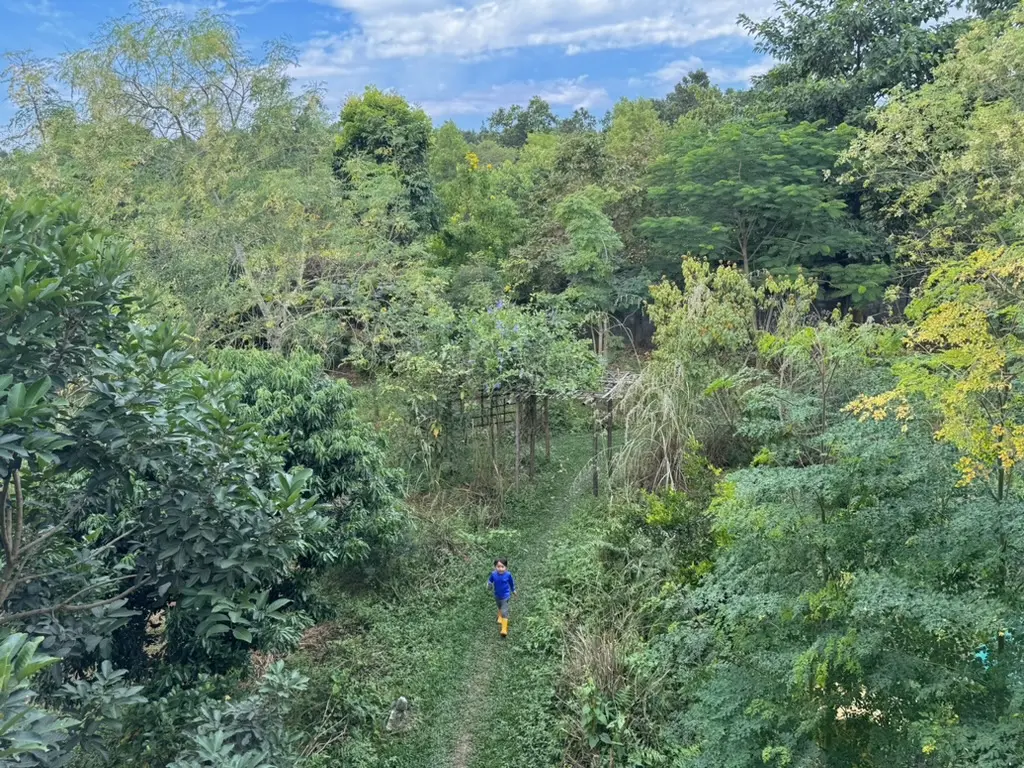
Northern West Bengal · India
Three acres of long-abandoned former paddy—widely regarded as wasteland—becoming a biodiverse agroforestry system. Wellspring is a field-scale site for long-term observation, practice-based research, demonstration and shared learning.
Wellspring Farm · six years after earthworks
The land
A difficult place to begin
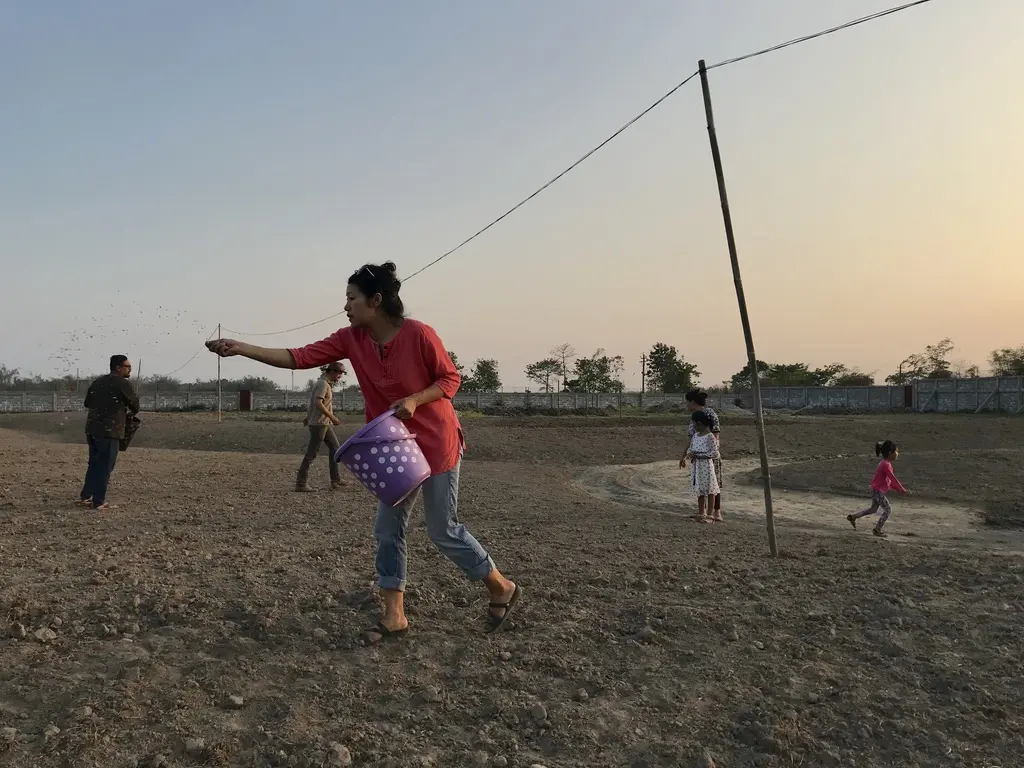
The land had once been cultivated as paddy. Increasing conflict with elephants contributed to its abandonment for more than a decade. By the time Zareni purchased it in 2015, it was poorly grazed, heavily degraded and commonly described as “wasteland.” Many people thought attempting to farm—and eventually live—here was foolish. Some still do.
Two years later there were apples on the tree, moringa in full flush, and hundreds of other plants taking root. Today, more than 300 species and cultivars of fruit, nut, medicinal and supporting plants grow here without synthetic fertilizers or pesticides.
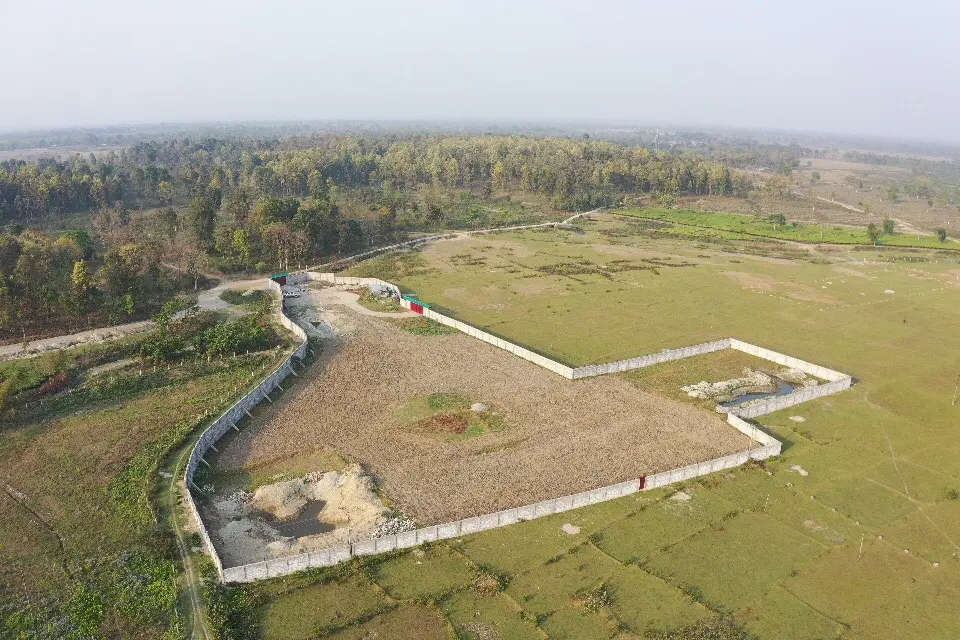
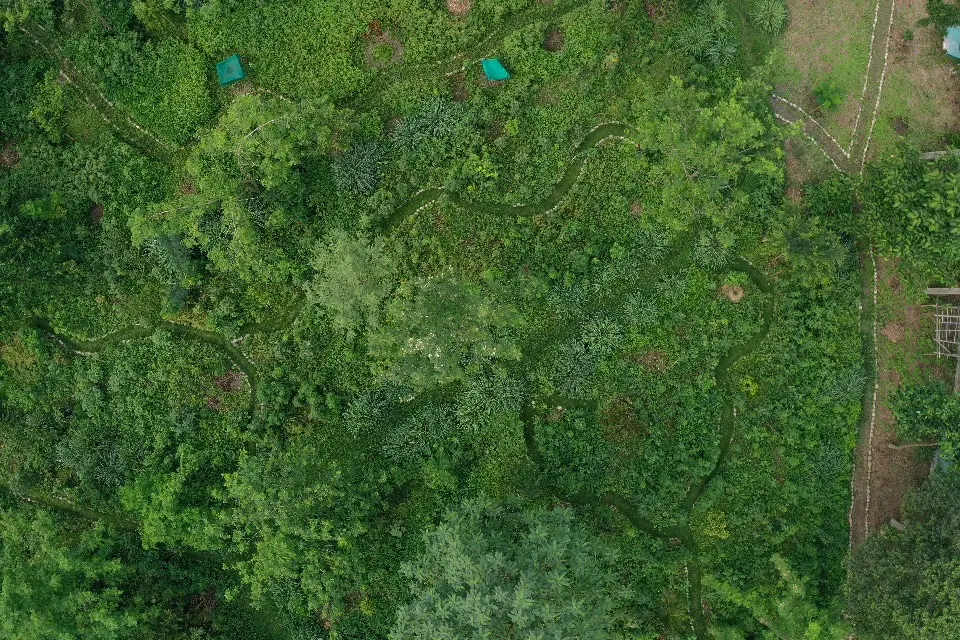
Change through time
These aerial views record the same three-acre site in 2019 and 2022, showing the establishment of water systems, pathways and multi-strata planting.
Studying at ECHO Asia introduced permaculture and agroecology as ways to read and design whole systems.
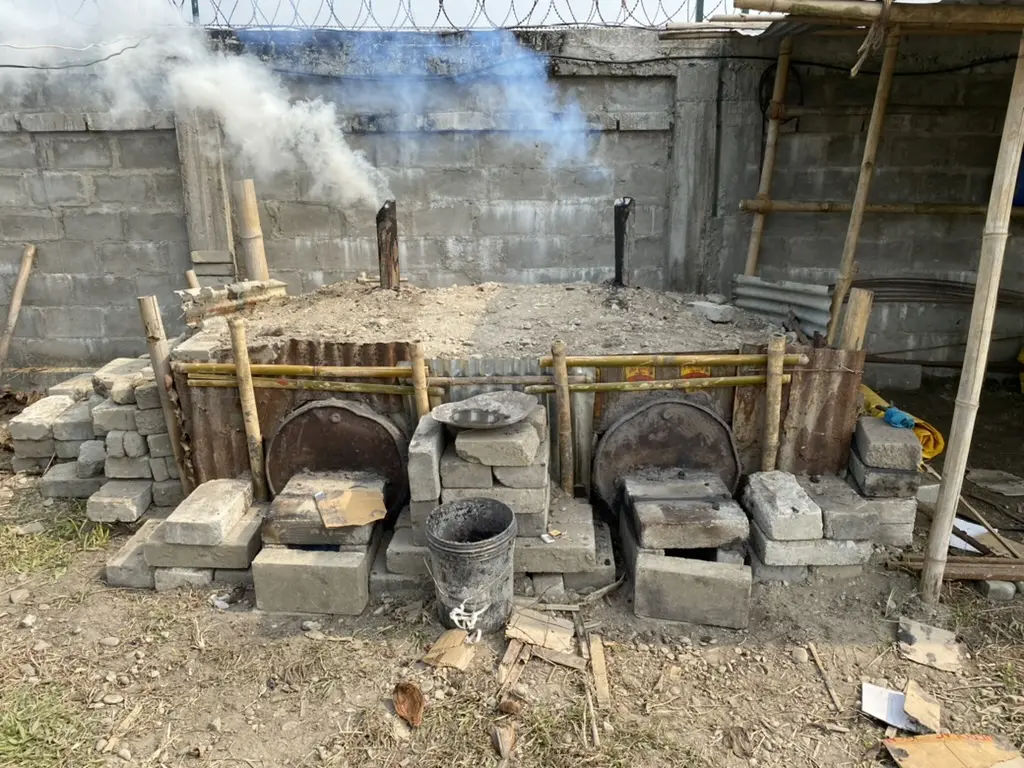
Training in Sweden, Nepal, the Philippines and the United States deepened the practice: farm design, orchards, nutrient cycling, biochar and microbial inoculation.
After three years of observation, earthworks established the water and access systems, with planting planned around future canopy trees and space allocated for semi-permanent structures.
The system continues to change—producing food while rebuilding habitat and soil, and developing interdependent ecological resilience.
Whole-systems design · water, soil, biodiversity + people
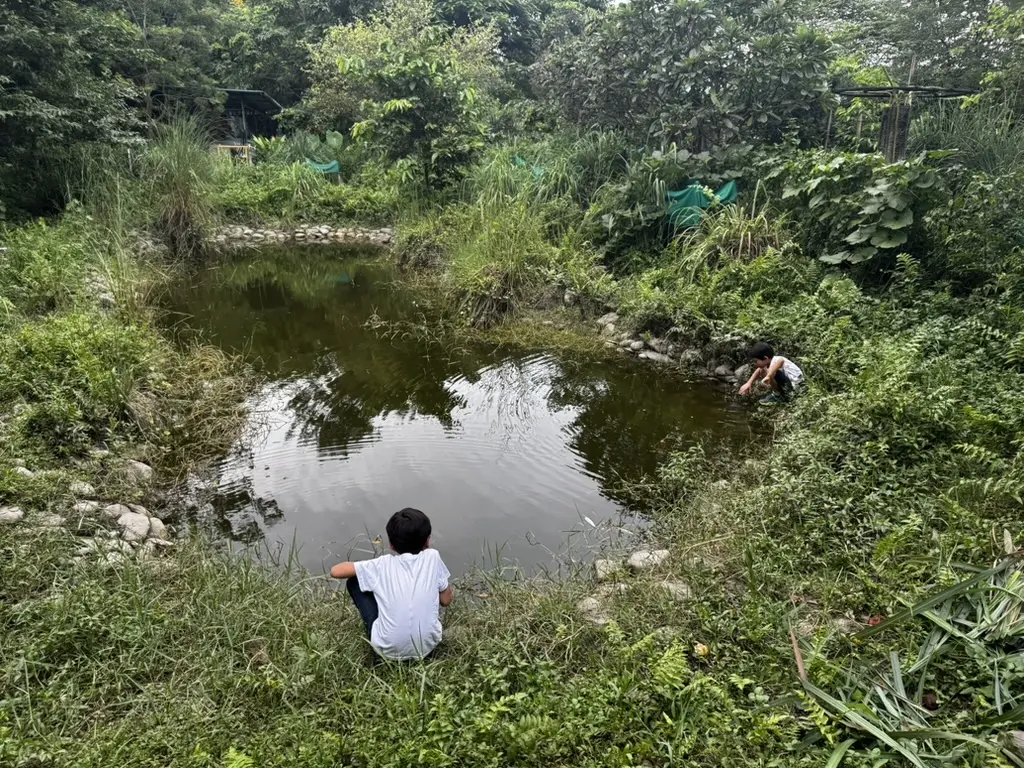
Detailed contour mapping, informed by three years of observation, revealed where monsoon water gathered and how it moved. Three ponds, permanent access routes and broad east–west planting mounds now slow the southerly flow and direct excess water toward the ponds, retaining it within the landscape where possible.
Vetiver, citronella and lemongrass help stabilize the drainage lines while turning their margins into productive planting space. Native soil, compost and activated biochar form the broad planting mounds. Each element was designed in relation to the others—to create the hydrological foundation for soil development, plant diversity and long-term resilience.
The system
Multi-strata agroforestry
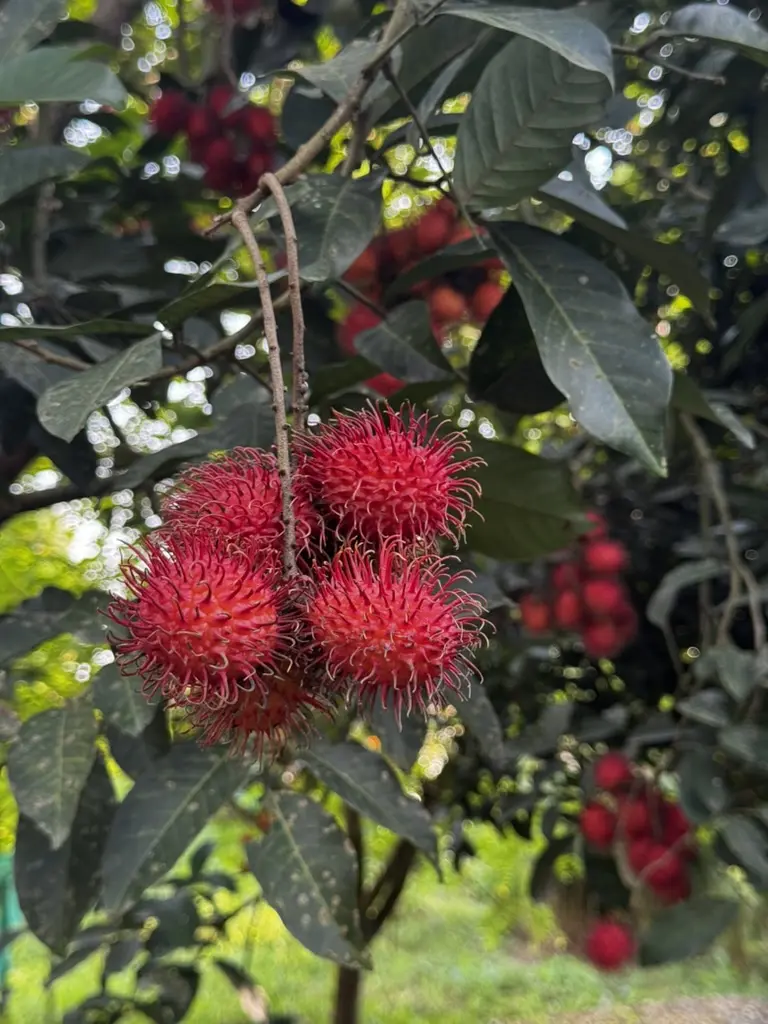
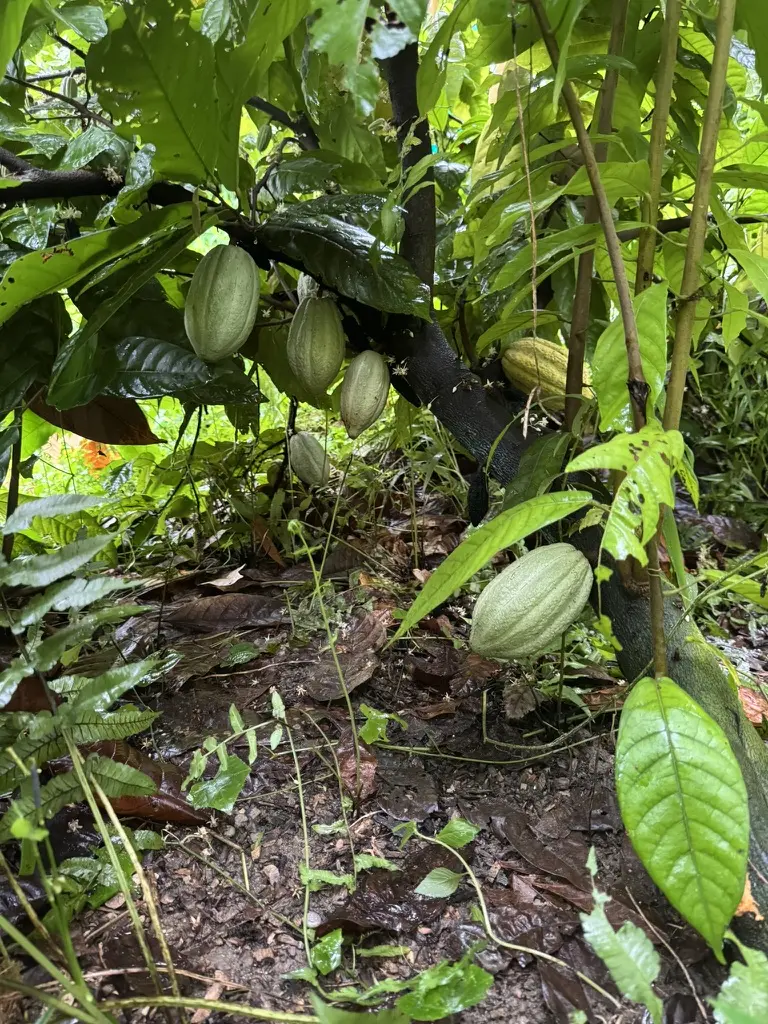
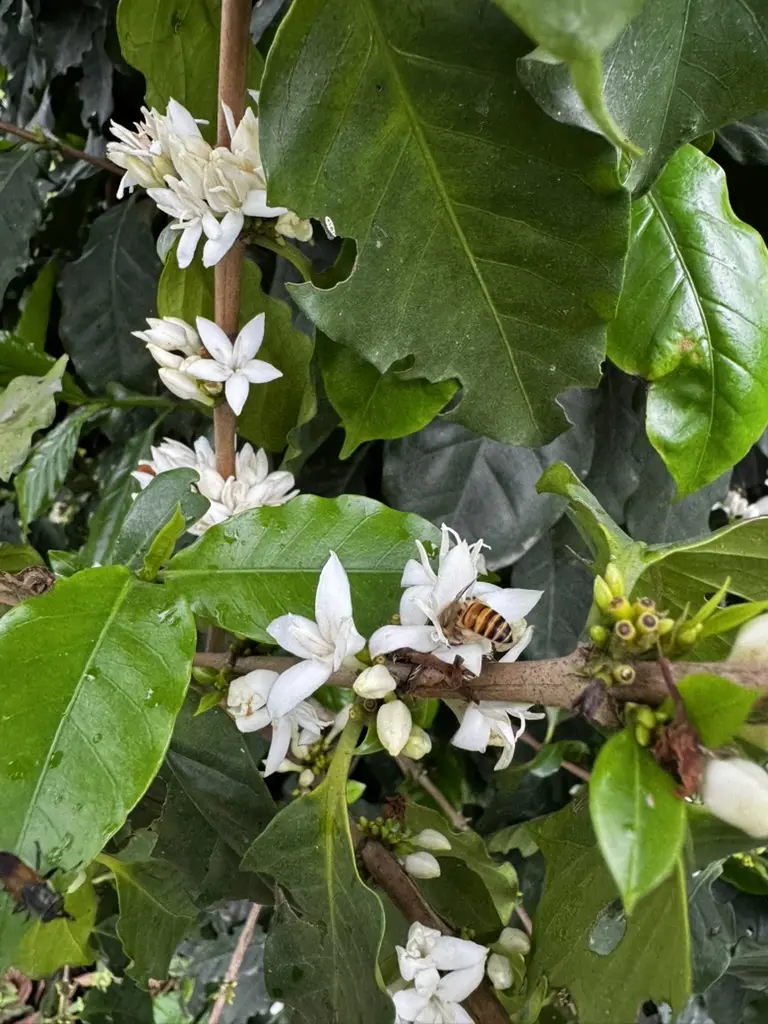
Our approach combines agroecology, biodiverse afforestation and productive agroforestry. Planting follows succession: quick-growing support species establish the conditions for longer-lived crops and canopy trees. Each layer does more than produce a harvest—it contributes roots, flowers, shade, habitat, biomass and food through relationships that change over time.
Taro, radish, sweet potato, arrowroot, turmeric, ginger
Groundnut, mint, wild strawberry, sweet potato, low-growing beans
Indigo, sunn hemp, bush bean, chilli, lemongrass, cassava
Coffee, cacao, pomegranate, citrus, apple, soursop, nam nam
Guava, pulasan, sapodilla, mamey sapote, kepel, rambutan
Neem, coconut, avocado, mango, rosewood, bacuri
Vanilla, black pepper, passionfruit, air potato, jasmine
Fungi, bacteria, soil organisms, pollinators and other decomposers transform organic matter, cycle nutrients and connect living processes throughout the system.
Expanding the useful plant palette
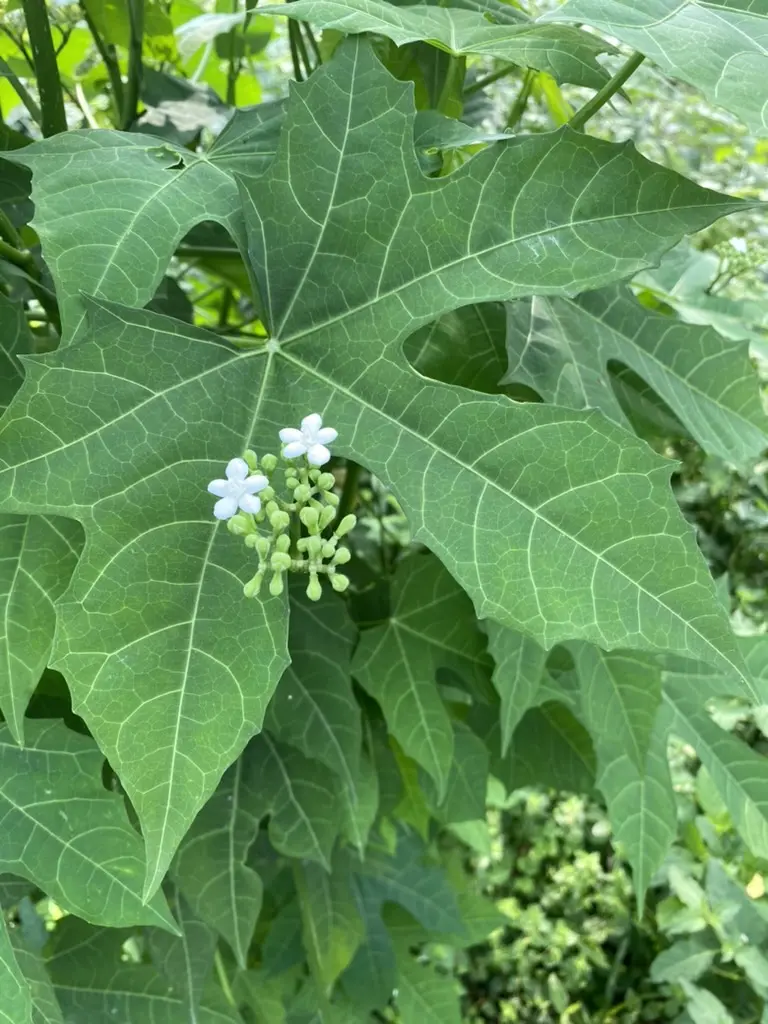
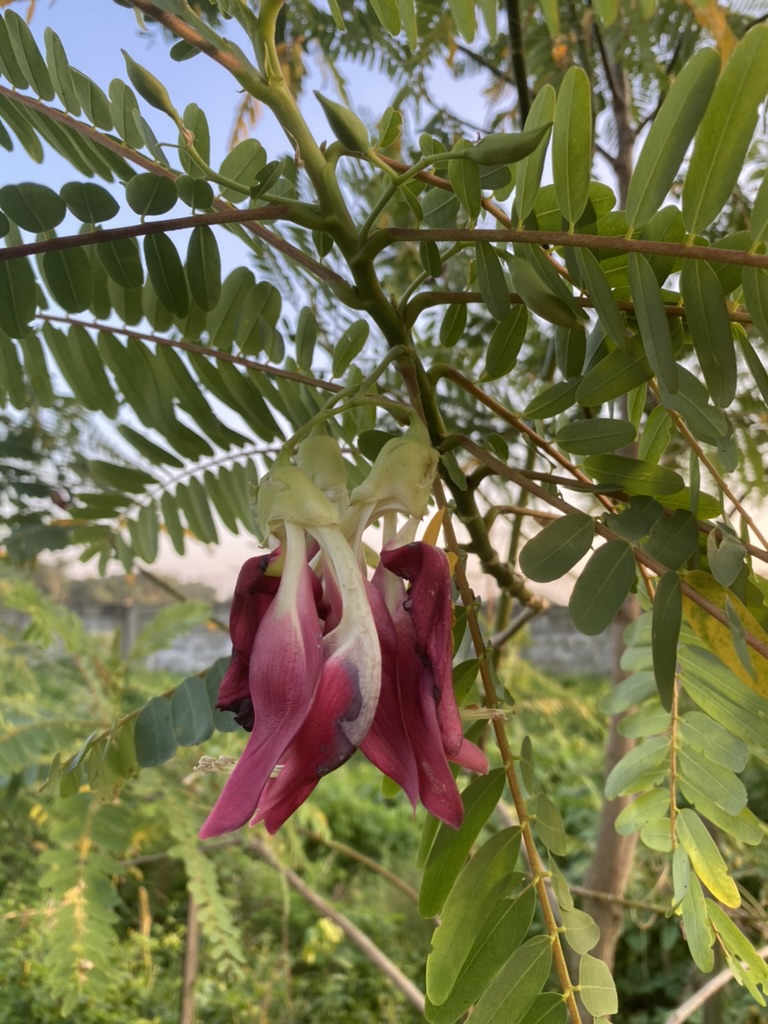
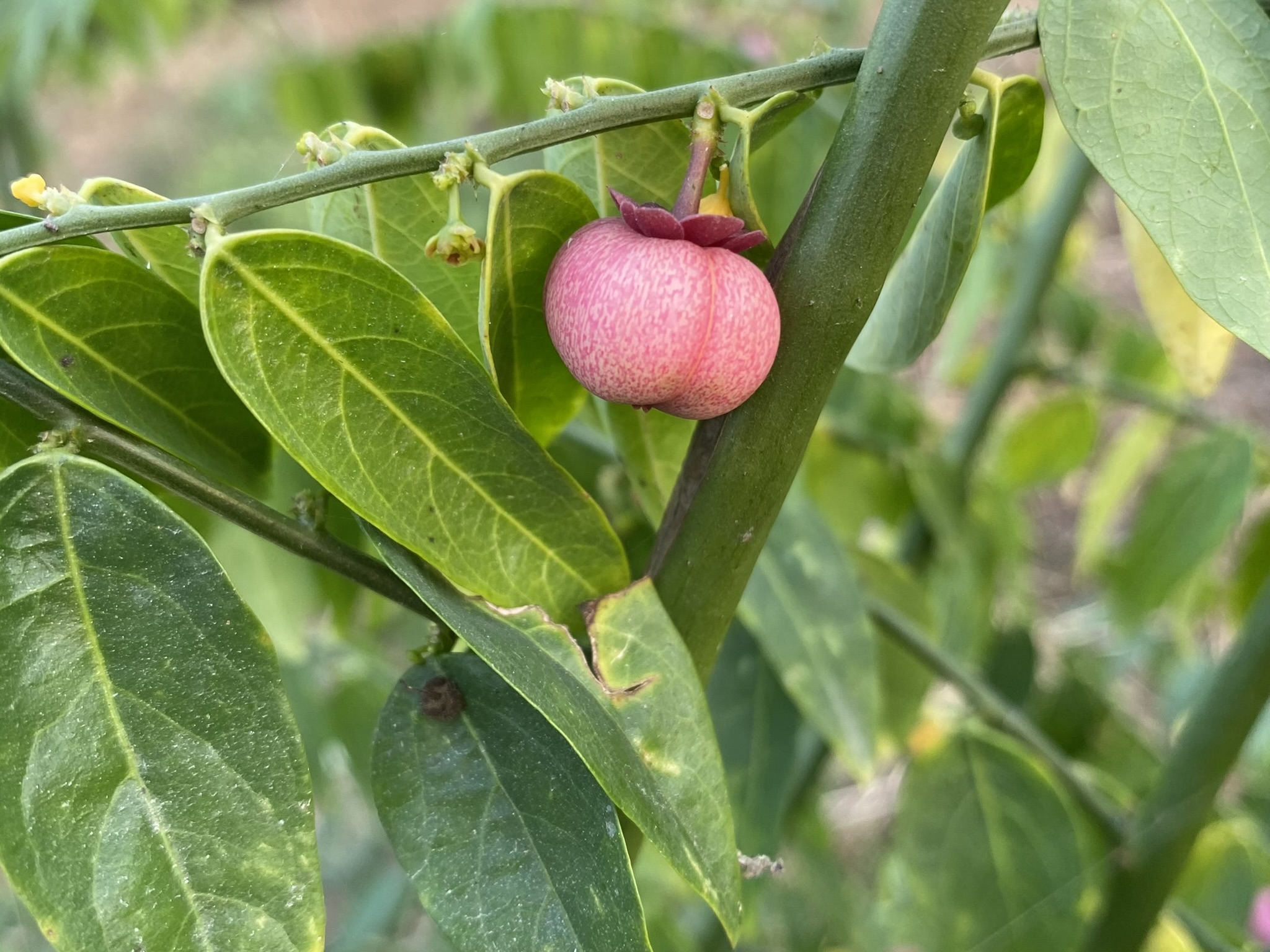
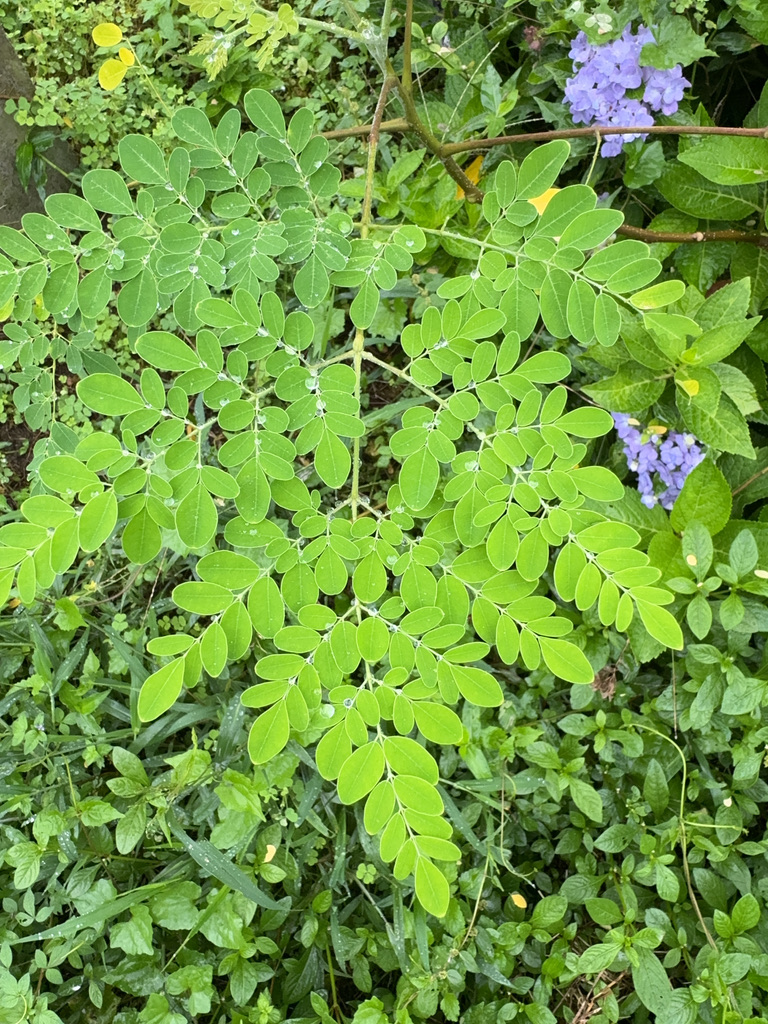
Wellspring grows and observes locally underused perennial foods and multipurpose plants that may contribute nutrition, fodder, biomass, habitat and resilience within small farming systems. These include chaya, katuk, moringa and several sesbanias—including white- and red-flowered Sesbania grandiflora, whose flowers and leaves are a beloved part of our diet.
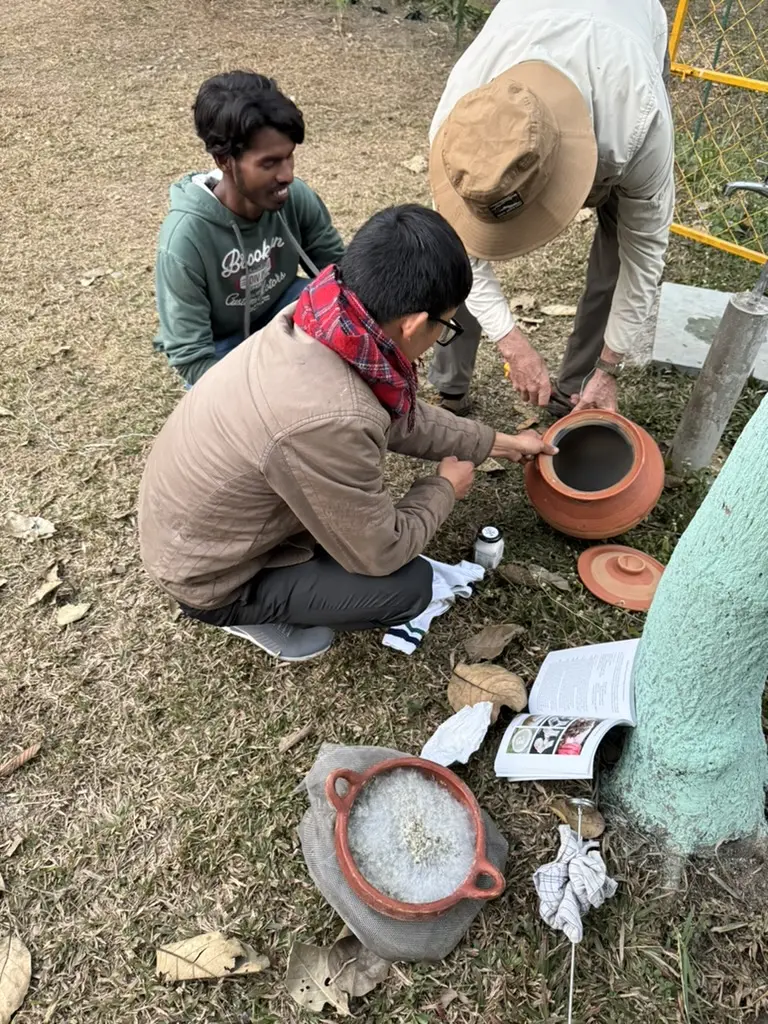
Preparing an indigenous microorganism culture.
Biological management
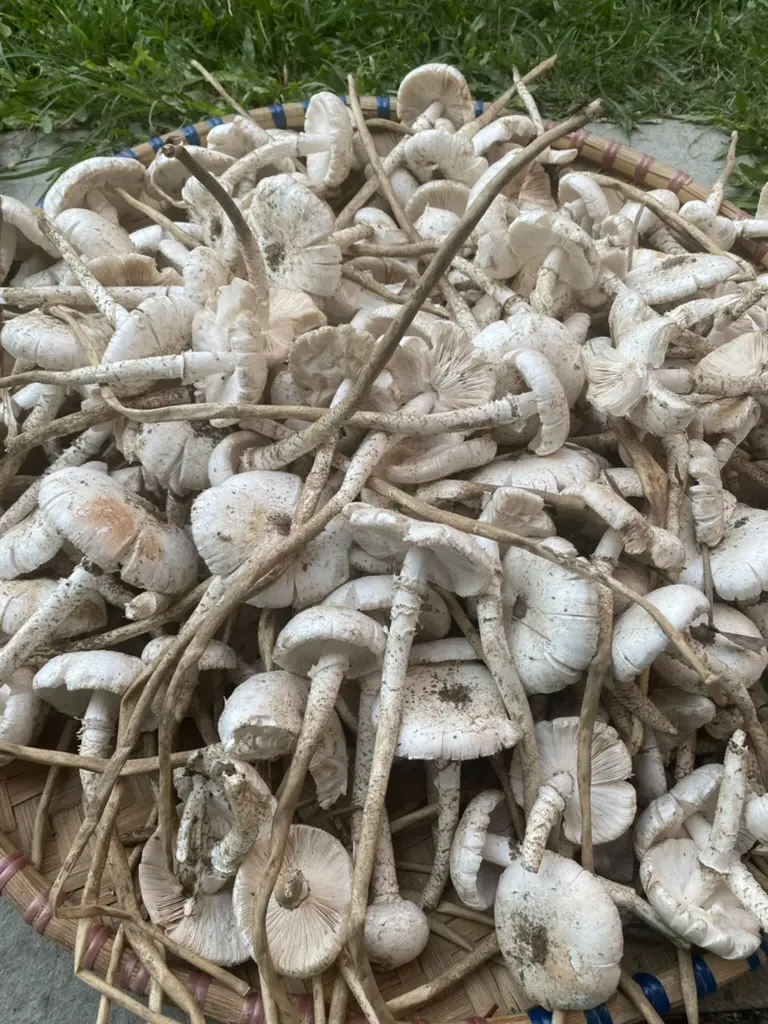
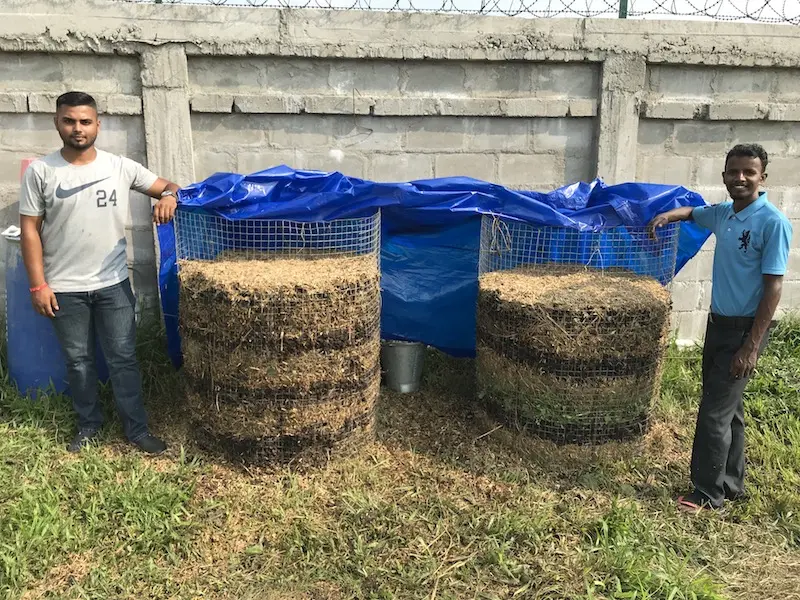
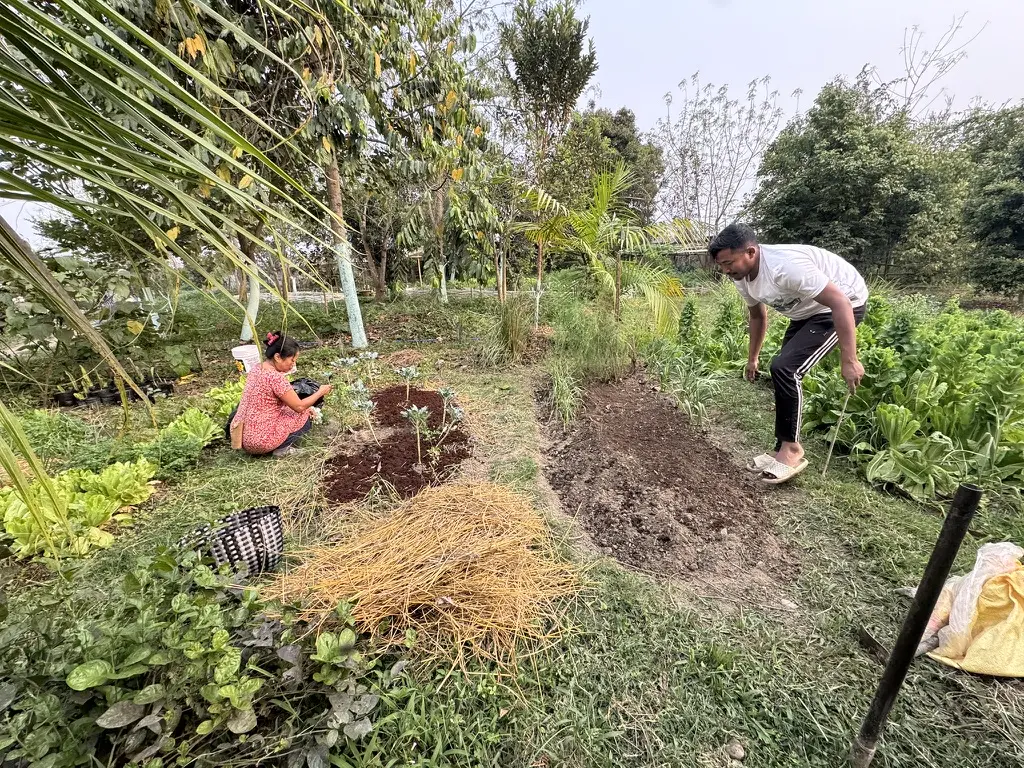
The work begins with covered soil and a moderated microclimate, conditions that support robust communities of beneficial microorganisms, varied habitat and plant guilds, conservative water management, and a steady cycling of organic matter. We monitor pests and disease, intervening cautiously through biological, organic or mechanical methods. Synthetic fertilizers, pesticides, soaps and detergents are excluded from the farm system.
Learning together
A small farm resource center
Wellspring is a place for long-term observation, practice-based inquiry, practical demonstration, training and exchange. We welcome people across generations and backgrounds—from children and multigenerational farming families to researchers, educators, NGO practitioners and agricultural entrepreneurs. People come with different priorities: a reliable harvest, a viable livelihood, practical skills or ecological questions. They inhabit, work within and depend on living ecosystems. Our aim is to find practical ways for rural livelihoods to thrive alongside the conservation and restoration of ecological health and resilience.
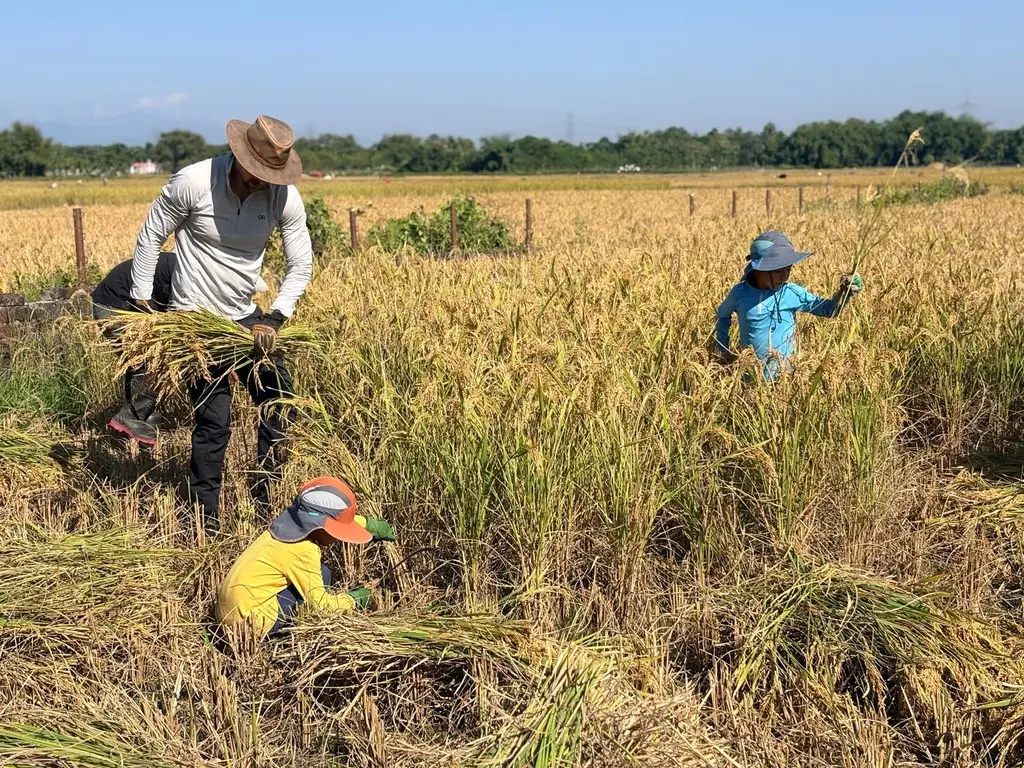
Many of the people who work with us live in a nearby rice-growing village. We join seasonal harvests, share seed selected for local performance, and explore methods from the system of rice intensification (SRI) with growers interested in testing them. The exchange is practical, voluntary and rooted in long relationships.
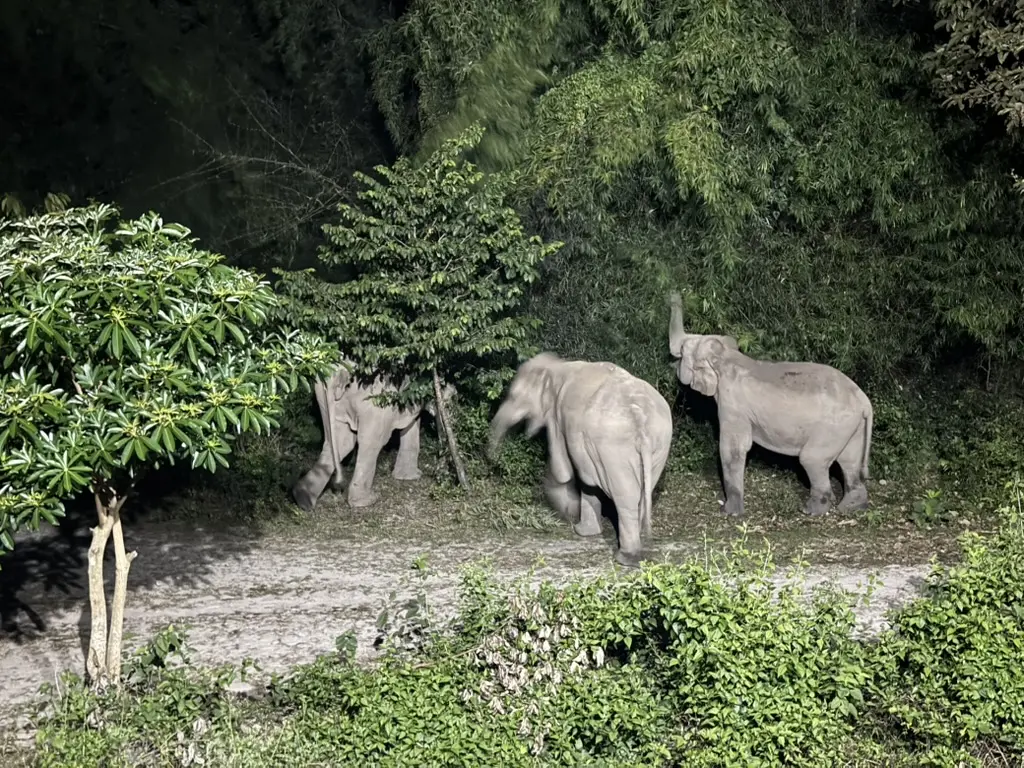
At the forest edge
Wellspring lies within a tropical forest landscape under intense pressure from habitat loss, extractive forestry and expanding monocultures. Elephants, leopards and other wildlife still move through the wider landscape.
Our scale is small by design. Wellspring is less a production farm than a field-scale site for practice-based agroecological research, demonstration and learning—a place to examine how water, soil, plant relationships, wildlife and rural livelihoods can be considered together, and which practices may be adapted responsibly elsewhere in South Asia.
Three acres cannot repair a regional landscape. They can make relationships visible, generate useful questions and provide a living place in which ideas can be tested.
Wellspring Farm
A field-scale site for practice-based agroecological research, demonstration and learning in northern West Bengal, India.